

Carsharing has evolved from a niche alternative to car ownership into a core component of urban and organizational mobility strategies.
Today’s most successful carsharing business models are:
- Strategically electrified based on regional infrastructure and policy readiness
- Enabled by software and telematics
- Financially disciplined rather than growth-at-all-costs
- Aligned with city policy, real estate, and employer needs
This guide explores how carsharing works, the different business models in use today, and what it takes to launch a financially and operationally sustainable carsharing service in 2026.
Table of Contents
The Carsharing Business Model: How It Works, What’s Changed, and How to Build One That Lasts
Overview: Carsharing Market Context
Carsharing didn’t grow out of a single trend, it emerged from a slow but steady shift in how people think about cars. Over time, more people began living in cities, driving less, and questioning the cost and hassle of owning a vehicle they used only occasionally. Carsharing offered a simple alternative: use a car when you need one, without owning it the rest of the time.
In the early days, adoption was led by younger, urban residents who were delaying car ownership. But the appeal quickly broadened. Families, employers, universities, real estate developers, and cities all began using carsharing to solve different problems, from reducing parking demand to replacing underused fleet vehicles or offering mobility as an amenity.
As app-based mobility services became mainstream, carsharing found its place alongside public transit, biking, and ridehailing rather than competing head-on. It filled the gaps where other modes fell short: longer trips, planned errands, multi-stop journeys, or access to a vehicle for a few hours or a day.
Over the past few years, the industry has matured. The focus has shifted away from rapid expansion toward right-sized fleets, stronger city partnerships, and operational sustainability. Electric vehicles, better data, and more realistic financial expectations have reshaped what a successful carsharing program looks like today. That said, electrification is not a one-size-fits-all solution. Its success depends heavily on local charging infrastructure, grid capacity, climate, regulatory support, and operational realities.
Carsharing is no longer about chasing growth for its own sake. It’s about designing the right model for the right place and making sure it actually works on the ground.
The sections below break down the main carsharing business models, how they generate revenue, and the common mistakes to avoid when building one.
The Four Main Car sharing Business Models in Use Today
While carsharing is often discussed as a single concept, there are several distinct business models in use today. Each serves different markets, users, and operational goals and each comes with its own opportunities and risks.
Understanding these differences is critical. Many carsharing programs struggle not because the idea is flawed, but because the wrong model is applied to the wrong context.
Below are the four most common carsharing business models in use today.
| Model | Primary Users | Typical Setting | Capital Intensity | EV Readiness* |
|---|---|---|---|---|
|
B2C |
General Public |
Dense urban areas |
Medium – High |
High (infrastructure-dependent) |
|
B2B |
Employees, tenants, institutions |
Campuses, business parks, mixed-use developments |
Medium |
Very High |
|
P2P |
Private car owners & renters |
Suburban & airport markets |
Low (asset-light) |
Moderate |
|
Non-Profit / Cooperative |
Community members |
Small & mid-sized cities |
Low–Medium |
Moderate–High (grant-dependent) |
*EV readiness depends on regional infrastructure, policy support, and operational capacity.
B2C: Business-to-Consumer Carsharing
What it is
- Shared vehicles offered directly to the public
- Models include station-based, one-way (A–B), and free-floating
- Priced by time, distance, or a combination of both
Who's it best for?
- Urban residents who don’t own a car but need one occasionally
- Cities looking to reduce private car ownership
- Operators with the capacity to manage public-facing services at scale
Where it works best
- Dense urban areas with strong transit networks
- Cities with supportive parking policies
- Markets with predictable, recurring demand
Common failure points
- Launching free-floating services without guaranteed parking access
- Fleets that are too small to be convenient
- Underestimating operational complexity and customer support needs
EV Readiness: High
- Predictable trip lengths support EV use
- Centralized fleet management simplifies charging
- Success depends on addressing charging strategy early
Current Examples
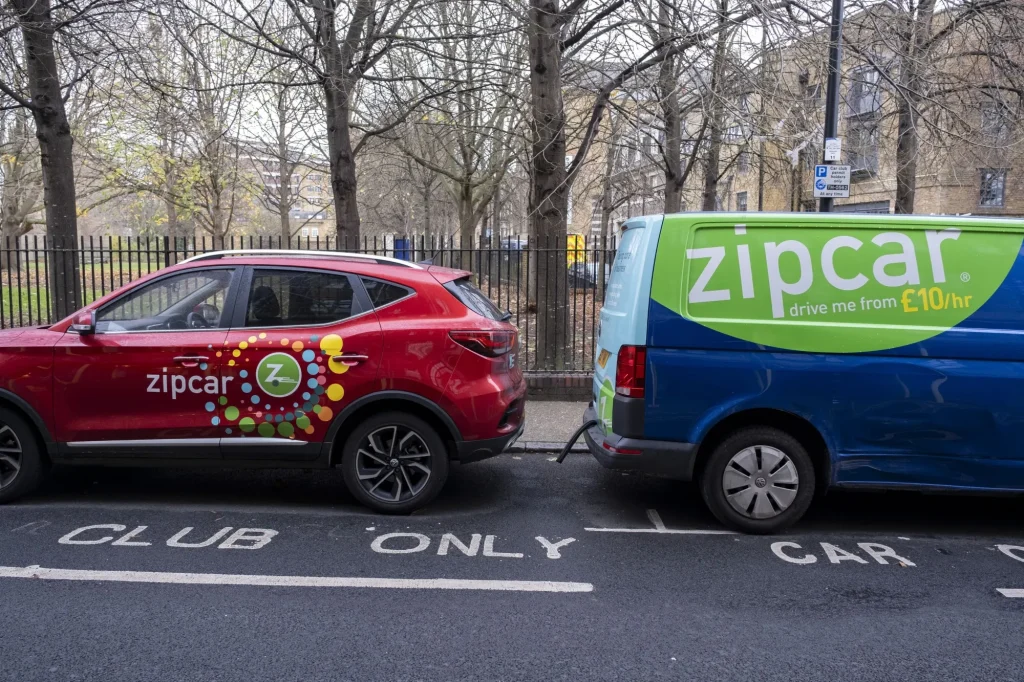
- Zipcar – Station-based and one-way services across North America and Europe
- Cambio – Strong presence in mid-sized European cities
- EVO – Hybrid free-floating and station-based model
- Share Now – Free-floating services in major European cities
B2B: Business-to-Business (Corporate) Carsharing
What it is
- Shared vehicles provided to employees, tenants, or institutional users
- Typically station-based and centrally managed
- Designed to replace or reduce traditional corporate fleets
- May operate as employee-only or shared public/private hybrid
Who's it best for?
- Employers with underutilized fleet vehicles
- Public agencies and institutions
- Universities, hospitals, and campuses
- Real estate developers offering mobility as an amenity
Where it works best
- Office campuses and business parks
- Mixed-use residential developments
- Institutional settings with predictable travel patterns
- Cities with strong corporate sustainability goals
Common failure points
- Treating carsharing as a perk instead of a fleet strategy
- Low internal adoption due to lack of change management
- Poor integration with booking and expense systems
- Overestimating utilization without demand analysis
EV Readiness: Very High
- Centralized parking simplifies charging infrastructure
- Predictable usage patterns support fleet electrification
- Works best where grid capacity and charging access are secure
Current Examples
- Ubeeqo — Corporate and mixed-use developments across Europe
- Mobility (Switzerland) — Long-standing corporate and public-sector integration
- Communauto — Hybrid B2B/B2C programs in Canada
- Real estate-integrated carshare programs in residential towers and mixed-use developments

P2P: Peer-to-Peer Carsharing
What it is
- Platform-based model where private vehicle owners rent out their cars
- Operator provides booking, insurance, and payment infrastructure
- Asset-light compared to fleet-owned carsharing
Who's it best for?
- Platforms seeking low capital expansion
- Vehicle owners offsetting ownership costs
- Markets where fleet investment is difficult to justify
Where it works best
- Suburban and lower-density areas
- Markets with strong trust and insurance frameworks
- Airport and longer-trip use cases
Common failure points
- Trust and liability concerns between users
- Regulatory and insurance complexity
- Inconsistent vehicle quality and availability
- Limited control over fleet standards
EV Readiness: Moderate
- Dependent on private owner participation
- Charging access varies significantly by region
- Less centralized control over electrification strategy
Current Examples
- Turo — Strong airport presence and longer-trip positioning
- Getaround — Urban-focused, short-term rentals
- SnappCar — Community-driven European P2P platform

Non-Profit & Cooperative Carsharing
What it is
- Community-based carsharing focused on access over profit
- Often member-owned or municipally supported
- Typically station-based and locally embedded
Who's it best for?
- Small and mid-sized communities
- Cities prioritizing equity and access
- Regions with limited private-sector operator interest
Where it works best
- Smaller urban centers
- University towns
- Communities with strong civic engagement
- Markets supported by grants or municipal partnerships
Common failure points
- Reliance on unstable funding sources
- Limited operational capacity as demand grows
- Difficulty scaling beyond initial geography
- Technology constraints compared to private operators
EV Readiness: Mod - High
- Often supported through grants or public funding
- Charging access dependent on municipal infrastructure
- Upfront capital costs can be a barrier
Current Examples
- Modo — Vancouver-based cooperative model
- Mobility (Switzerland) — Originally cooperative, now large-scale national operator
- Colorado CarShare — Community-focused nonprofit serving Boulder and Denver
- CarShare Vermont — Regional nonprofit model

Carsharing Economics: What Actually Drives Profitability
Carsharing is not capital-intensive because of vehicle cost — it is sensitive because of utilization.
What determines success:
- Fleet utilization rate
- Trip frequency and duration
- Parking and charging costs
- Insurance structure
- Operational efficiency
The most successful programs optimize for:
- Right-sized fleets
- Predictable demand clusters
- Operational discipline
- Blended revenue streams
Carsharing is less about selling access and more about managing shared assets efficiently.
Electric Vehicles and Carsharing Strategy
Electrification is increasingly shaping shared mobility, but its role in carsharing depends heavily on context.
EVs offer clear advantages for carsharing:
- Lower fuel and maintenance costs over time
- Strong alignment with municipal climate targets
- Quiet operation in urban environments
- Positive public perception
However, EV fleets are not automatically the right solution everywhere.
Successful electrification depends on:
- Reliable and accessible charging infrastructure
- Grid capacity and energy pricing
- Parking policy and curb management
- Climate conditions
- Operational readiness and staff training
In dense urban markets with charging support, EV carsharing can be financially and operationally advantageous. In regions with limited infrastructure or high energy volatility, a phased or hybrid fleet strategy may be more appropriate.
Electrification in carsharing is therefore not a trend to follow blindly, it is a strategic fleet decision based on local realities.
Infrastructure Alignment Is Critical: Public reporting noted that car2go’s early all-electric launch in San Diego faced operational strain when large-scale charging deployment did not materialize as anticipated.
Lesson: Fleet electrification must align with reliable charging infrastructure and contingency planning.

Preparing for Launch: What Actually Matters
Once a business model is selected, execution becomes critical. Carsharing succeeds or fails in the details.
1. Regulatory Alignment
Before purchasing a single vehicle, operators must confirm:
- Parking permissions (on-street vs station-based)
- Insurance requirements
- Rental car taxation rules
- Municipal compliance frameworks
Many failed launches have underestimated the complexity of local parking policy.
Free-floating services, in particular, require explicit curb access approval. Without it, even a well-designed model becomes unworkable.
Parking Policy Can Determine Viability: When DriveNow exited San Francisco in 2015, media coverage referenced challenges related to aligning its free-floating model with local parking regulations.
Lesson: Secure regulatory and curb alignment before deployment.
2. Market Assessment
Demand must be proven. Not assumed.
Operators should analyze:
- Population density and land use
- Competing mobility services
- Transit integration
- Trip patterns and mobility gaps
- Willingness to shift from ownership
Technology expectations also vary by market. In competitive cities, seamless app-based access is the baseline. In underserved markets, technological differentiation may be a strategic advantage.
The goal is simple: Build the right service for the right environment.
Scale Influences Perceived Reliability: Larger-scale free-floating deployments, such as those by car2go in Berlin, have been observed to demonstrate higher user confidence compared to smaller initial launches by competitors.
Lesson: Fleet density influences perceived convenience and adoption.
3. Financial Modeling
Carsharing economics are sensitive to utilization rates.
On the revenue side:
- What percentage of members will be active?
- What is the expected trip frequency?
- What are average trip durations?
- How does churn affect projections?
On the cost side:
- Vehicle acquisition or leasing
- Insurance and risk management
- Maintenance and cleaning
- Charging (for EV fleets)
- Software licensing
- Staffing and customer support
- Taxes and transaction fees
Profitability depends on balancing utilization with operational discipline — not optimistic growth assumptions.
4. Technology Infrastructure
A modern carsharing platform must support:
- Telematics and vehicle data collection
- Dynamic pricing and billing systems
- Fleet tracking and asset management
- Customer management and support workflows
- Real-time reporting and KPI dashboards
Technology is not just a booking interface — it is the operational backbone of the business.
Operators should prioritize long-term scalability and data visibility over feature overload.
5. Operational Structure
Carsharing operations revolve around three core pillars:
Community
- Membership growth
- Partnerships
- Utilization optimization
Fleet
- Maintenance and cleaning
- Vehicle redistribution
- Charging logistics (for EVs)
Member Services
- Registration and onboarding
- Trip issue resolution
- Payment support
Operational excellence — not just fleet size — determines long-term success.
Common Mistakes in Carsharing
Carsharing rarely fails because demand doesn’t exist. It fails because execution misaligns with context.
| Mistake | What Happens | Why It Fails | What to Do Instead |
|---|---|---|---|
|
Launching Without Regulatory Certainty |
Free-floating services operate without secured parking or curb access |
Operational friction makes the service unreliable or unworkable |
Secure parking policy and municipal alignment before deployment |
|
Underestimating Convenience |
Vehicles are too far away or too scarce |
Users revert to private cars or ridehailing |
Size and distribute fleets based on real urban geography and demand density |
|
Ignoring Infrastructure Constraints |
EV fleets struggle due to charging gaps or unreliable installations |
Service disruptions and operational inefficiencies |
Align fleet electrification with reliable charging, redundancy planning, and local grid readiness |
|
Overestimating Growth |
Rapid expansion without utilization stability |
Financial strain and underperforming fleets |
Start with right-sized fleets, expand gradually, and build strong local partnerships |
Carsharing in Practice: Applying the Framework
The principles outlined above (model selection, EV alignment, financial discipline, and operational readiness) are not theoretical. They are the difference between pilot programs and sustainable services.
Here is how those principles have played out in practice.
Business Model Discipline & Financial Sustainability
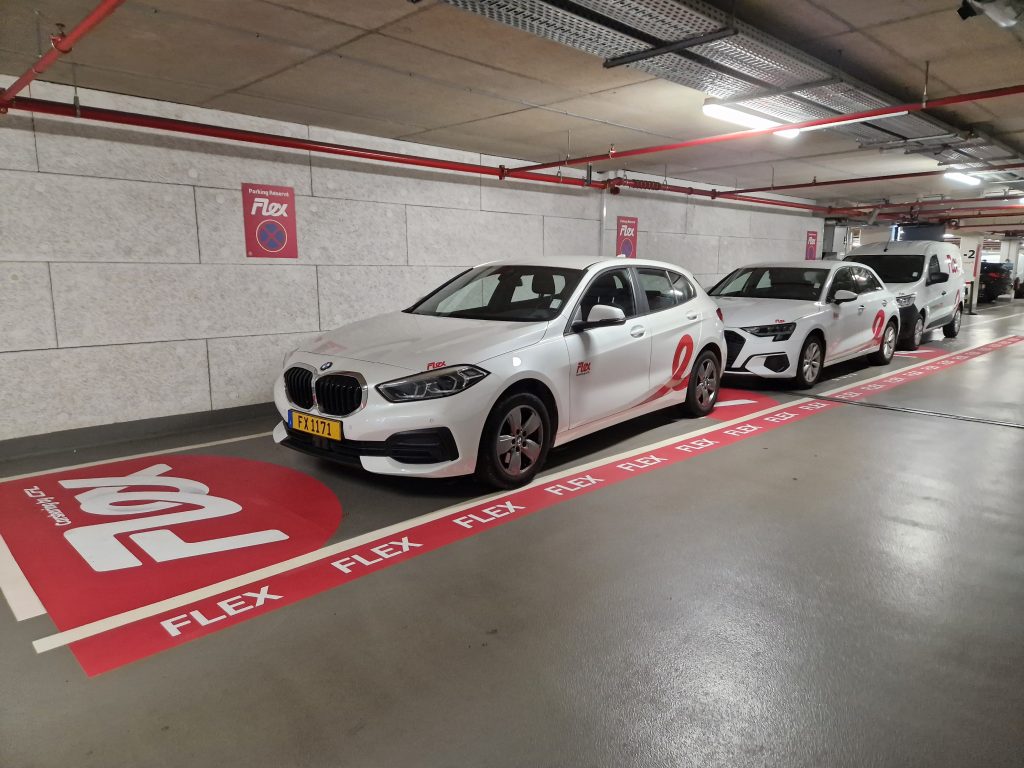
Flex Carsharing (Luxembourg)
Flex, one of Luxembourg’s leading station-based operators affiliated with the national railway (CFL), faced a common challenge: growth was strong, but long-term sustainability required better financial alignment.
Rather than expanding fleet size blindly, the focus shifted to:
- Linking ridership and utilization to long-term profitability
- Testing cost-saving measures through scenario modeling
- Aligning new features with financial performance
- Building an 8-year roadmap toward net positive cash flow
The result was not just expansion — but a strategy for self-sustaining growth.
Takeaway:
Carsharing success depends less on scale and more on utilization-driven financial discipline.
EV Strategy Aligned with Infrastructure & Equity
Colorado CarShare (Denver)
Expanding EV carsharing in Denver required more than adding electric vehicles. It required confirming where electrification would be both impactful and viable.
The work focused on:
- Technical readiness assessments across 27 potential sites
- Identifying 12 near- to mid-term viable locations
- Evaluating charging availability and partnership potential
- Engaging municipal stakeholders and priority communities
The strategy prioritized neighborhoods with high environmental burden scores while ensuring infrastructure feasibility.
Takeaway: Electrification must align with infrastructure, partnerships, and community realities — not just climate ambition.
Operational Design & Utilization Management
ekar (UAE & Saudi Arabia)
As one of the first pay-as-you-go carsharing operators in the Middle East, ekar required full operational architecture from day one.
The focus included:
- Service and product design
- Technology integration and testing
- SOP development and team training
- KPI dashboard creation to track utilization
Within two years, utilization reached 22% — outperforming many mature markets at the time — and the operator secured one of two exclusive operating licenses in Dubai.
Takeaway:
Operational systems and utilization tracking determine viability — not just fleet deployment.

Model Innovation & Ecosystem Integration
BMW ReachNow (U.S.)
Launching ReachNow required navigating competitive urban markets while experimenting with an integrated model combining carsharing and ride-hailing.
The approach included:
- Multi-city launch strategy
- Mixed fleet deployment (including EVs)
- Integration of ride-hailing within a single platform
- Operational testing prior to scale
The program reached over 13,000 registrations within the first month in Seattle and later exceeded 100,000 members across markets.
Takeaway:
Carsharing does not operate in isolation — it must integrate strategically within broader mobility ecosystems.
Thinking About Launching or Scaling?
Whether you are:
- A city exploring shared mobility
- An operator refining your model
- A real estate developer adding mobility amenities
- Or an OEM entering the shared market
The success of your carsharing program will depend on context, not trend adoption.
A well-designed carsharing strategy balances:
- Business model selection
- Fleet and EV planning
- Financial modeling
- Technology infrastructure
- Operational systems
If you are evaluating your next step, start with a structured assessment — not assumptions. If you’d like expert guidance tailored to your market, reach out to our team at info@movmi.net. We’d be happy to explore how we can support your next step.